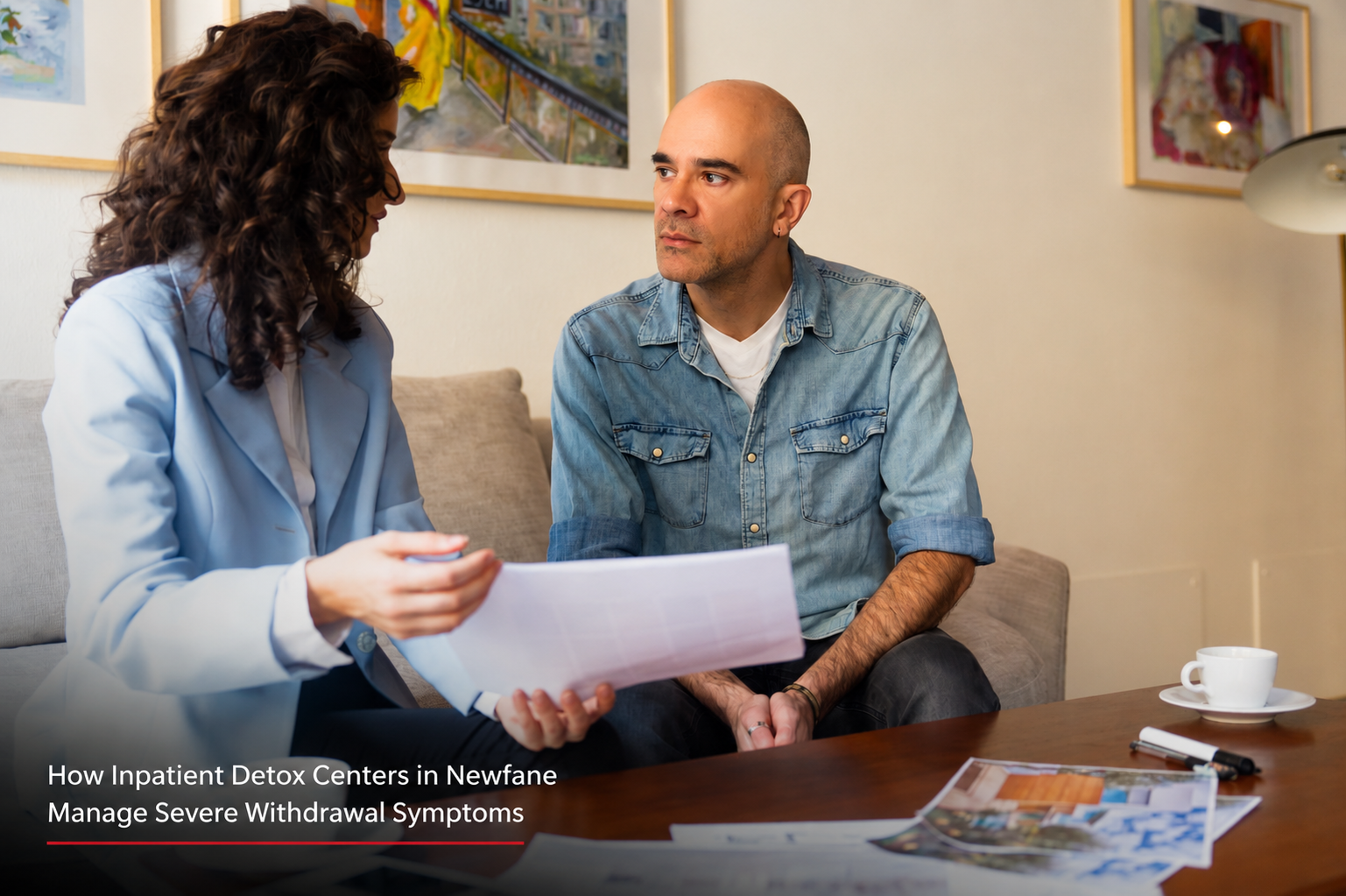
Withdrawal from alcohol, opioids, or benzodiazepines can be hard on the body and, in some cases, dangerous without medical care. Symptoms can include shaking, vomiting, dehydration, high blood pressure, confusion, seizures, or intense cravings. That is why inpatient detox is built around close monitoring while the substance leaves the body.
At Niagara Recovery, an experienced Newfane rehab team helps manage withdrawal with 24/7 nursing support, physician oversight, medication-assisted treatment, and care plans based on the substance involved. Alcohol withdrawal is not handled the same way as opioid or benzodiazepine withdrawal, so the plan has to match what the person is going through. The goal is to keep the patient as safe and stable as possible during the hardest part of the process.
Why Severe Withdrawal Requires Medical Supervision
Not all withdrawal is dangerous, but withdrawal from alcohol, benzodiazepines, and opioids carries specific medical risks that cannot be safely managed at home. Alcohol withdrawal can cause delirium tremens (DTs) and seizures. Benzodiazepine withdrawal shares many of the same risks. Opioid withdrawal, while rarely fatal, causes severe physical symptoms that make relapse almost certain without clinical support, and after even a brief period of abstinence, opioid tolerance drops significantly, raising the overdose risk sharply if a person relapses.
Inpatient medical detox addresses all of these risks by keeping a clinical team present around the clock and making medications available immediately when symptoms escalate.
How We Manage Alcohol Withdrawal
Alcohol withdrawal is managed through a medically supervised tapering protocol. Rather than stopping abruptly, the clinical team administers decreasing doses of medication over the course of detox to reduce withdrawal severity and prevent dangerous complications.
Vital signs are monitored continuously. Nursing staff are present 24 hours a day. Any sign of developing DTs or seizure activity is addressed immediately by the medical team. The goal is to keep the client physically stable throughout the process so that they can move into the residential rehabilitation program once detox is complete.
How We Manage Opioid Withdrawal
Opioid withdrawal is managed with MAT medications. We use Suboxone (buprenorphine/naloxone), Buprenorphine, Sublocade (injectable buprenorphine), and Vivitrol (naltrexone) depending on the clinical picture. These medications reduce withdrawal severity, control cravings, and keep the client stable enough to engage with treatment.
The medical team prescribes and monitors all medications throughout the detox period. Dosing decisions are individualized based on the substance involved, the length of use, and the client's medical history. Vivitrol is typically introduced after the acute withdrawal phase is complete, as it works by blocking opioid effects rather than reducing withdrawal symptoms.
How We Manage Benzodiazepine Withdrawal
Benzodiazepine detox uses a supervised tapering method managed by a physician. Going cold turkey from benzodiazepines without medical oversight is medically dangerous, and we do not allow that to happen here. The taper is paced to allow the body to clear the substance at a rate that minimizes withdrawal severity.
Clinical monitoring continues throughout the taper. The nursing team tracks symptoms, adjusts the protocol as needed, and ensures the client is stable before the tapering schedule progresses.
What Happens in the First 24 Hours at Our Facility
When a client arrives, an intake coordinator greets them and begins the admission process. A nurse takes vitals, reviews medical history and current medications, and collects a urine sample to identify substances currently in the system. Based on that assessment, the clinical team develops a medication and monitoring plan specific to that client.
Within the first 24 hours, every client also receives a full psychiatric evaluation. Co-occurring mental health conditions, including depression, anxiety, and PTSD, are common in people going through withdrawal. Identifying those conditions at admission means they are addressed alongside the detox process, not discovered after the fact.
Frequently Asked Questions
Is alcohol withdrawal dangerous without medical supervision? Yes. Alcohol withdrawal can cause seizures and delirium tremens, both of which can be life-threatening. Medical detox at a licensed facility is the safest approach for anyone who drinks heavily or daily.
What medications are used in opioid detox? We use Suboxone, Buprenorphine, Sublocade, and Vivitrol. The medical team determines which medications are appropriate based on each client's individual clinical profile.
How long does detox take? The timeline varies by substance. Opioid withdrawal typically stabilizes within 5 to 7 days. Alcohol and benzodiazepine detox may take longer depending on the level of dependence and how the taper is paced.
Can I go directly from detox into the residential program? Yes. We hold two OASAS licenses, one for detox and one for rehabilitation, so clients move directly from detox into the 28-day residential program without a transfer or a gap in care.
Contact Us
If you or a loved one is seeking compassionate and professional addiction treatment, Niagara Recovery is here to help. Reach out to us to begin the journey toward recovery.
Facility Address: 2600 William St, Newfane, NY 14108
- Intake Phone: (716) 203-8000
- Facility Phone: (716) 265-3700
Email: admissions@niagararecovery.com
Office Hours: Monday–Sunday: 24 hours
Related Topics: